



Making websites more accessible isn’t just a technical requirement – it’s about giving everyone equal access to online information, services, and experiences.
For the 87 million Europeans living with a disability, this matters. And from 28 June 2025, it will also be required by law.
As part of the European Accessibility Act (EAA), all business websites must meet the minimum recognised accessibility standard: WCAG 2.1 Level AA.
We're pleased to share that Maxxton Web Manager now meets this standard at the platform level and is designed with future accessibility developments in mind (i.e. WCAG 2.2), providing you with a solid technical foundation to build accessible, inclusive websites.
But the final step still sits with you.
.png?width=1227&height=943&name=image%20(6).png)
What accessibility really means
When we talk about accessibility, we don’t mean uptime, browser support, or mobile responsiveness – areas where Maxxton Web Manager already performs strongly.
We're talking about something different: how well your site works for people using screen readers, those who rely on keyboard navigation, or guests with visual or cognitive impairments.
The Web Content Accessibility Guidelines (WCAG 2.1) break this down into four key principles: your site must be Perceivable, Operable, Understandable, and Robust. In practice, this means:
- Adding descriptive texts for every image (via the Maxxton Content Manager)
- Ensuring buttons are clearly labelled and large enough to use
- Structuring your content with proper headings (H1, H2, etc.)
- Making your menu and navigation logical and keyboard-friendly
- Using clear, descriptive calls-to-action (“Book your stay” instead of “Click here”)
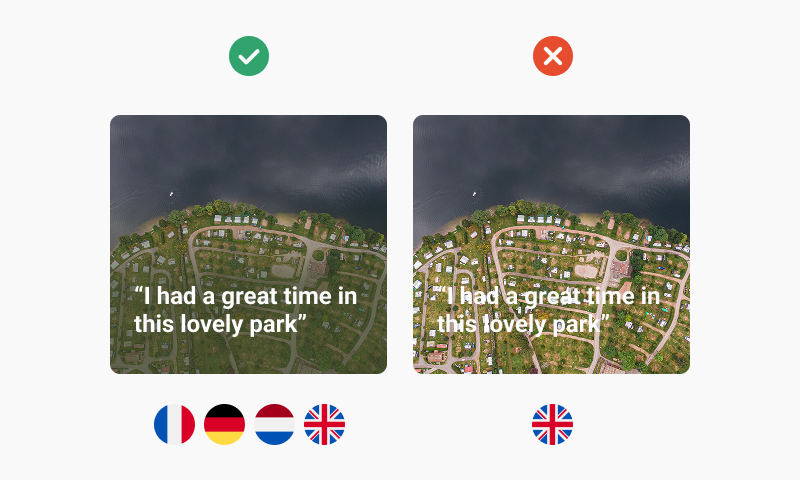
- Providing sufficient color contrast between text and background (4.5:1 ratio minimum)
- Adding clear error messages and instructions for form fields
- Making sure your website works properly when users zoom text up to 200%

What we've done, and what you need to do
Maxxton Web Manager now includes all the tools to support accessibility: proper semantic markup, alt text fields, responsive layout templates, and more. No technical changes are needed on our side.
However, your website content and design are unique to you. So we cannot verify whether:
- Your navigation is intuitive and screen-reader friendly
- Buttons and elements follow good visual contrast and sizing rules
- Texts, labels, and headings are descriptive and consistent
- Images include appropriate and meaningful alternative text
These are the areas where you, or your web designer, need to take the lead.


.png?width=1156&height=700&name=image%20(5).png)
In addition, we strongly recommend publishing an accessibility statement. This is a public-facing page where you acknowledge your commitment to accessibility, outline which standards you meet, and give users a way to report issues. You can use the W3C accessibility statement generator to get started.
Need support?
If accessibility hasn’t been part of your design process so far, we’re happy to help. Whether it’s guidance for your internal team or advice alongside your creative agency, Maxxton is here to support the last mile.
Together, we can make hospitality more inclusive, for everyone.


