



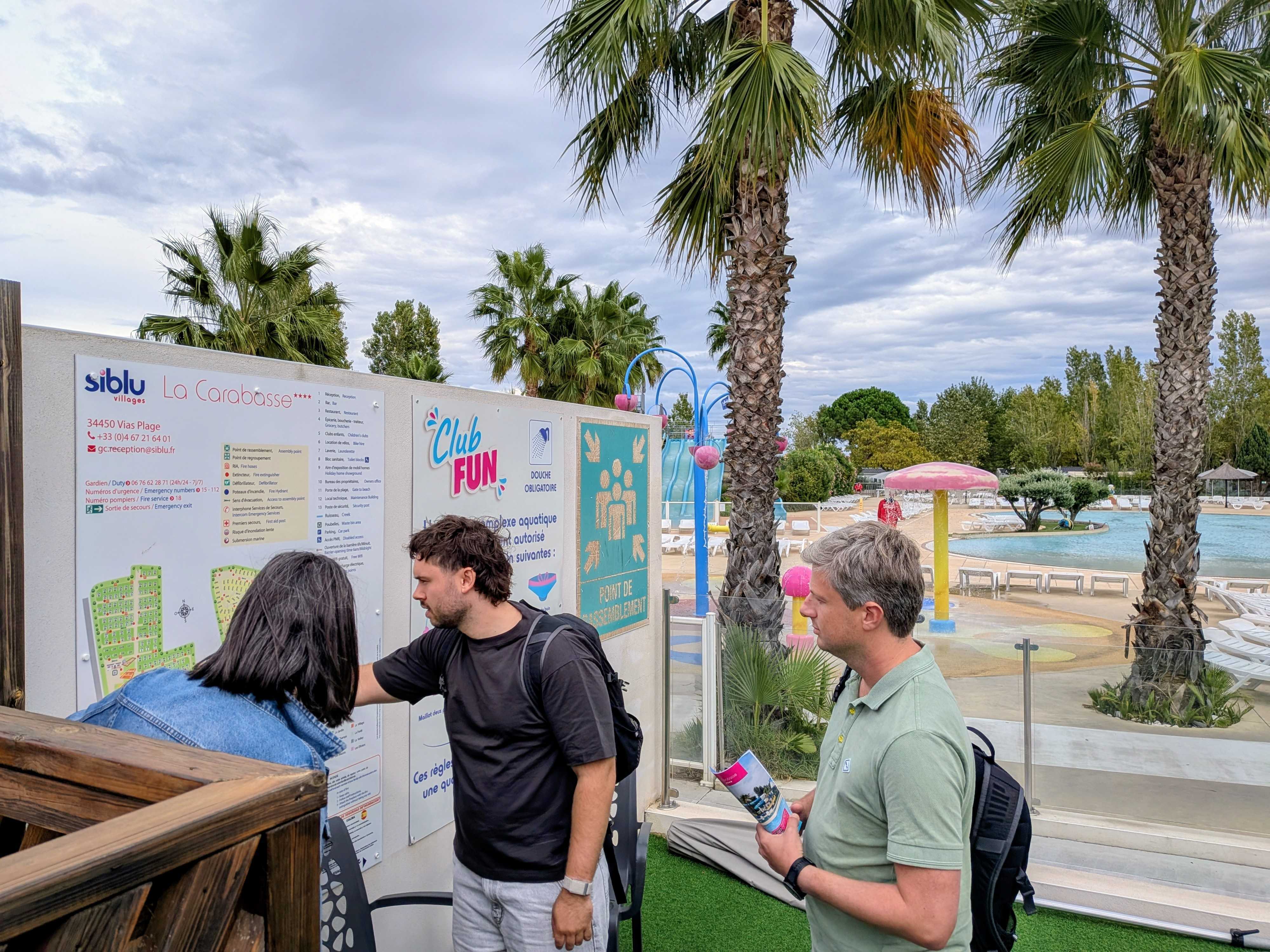
On 8 and 9 September 2026, our French and Dutch product teams spoke with Sandaya and Siblu onsite workers across five campsites: Aloha, Les Tamaris and Domaine de la Dragonnière from Sandaya, and Lac des Rêves and La Carabasse from Siblu.
We wanted to understand what using Maxxton is actually like in practice.
A PMS is more than a list of features
A PMS brings reservations, availability, invoicing and guest communication together. For management, it is an important part of running the business. For front desk and operational teams, it is primarily the software that helps them do their jobs.
That is why a product demo only tells half the story.
A system can do a lot. The question is how quickly someone can find what they need, how easy it is to make a change, and how much time staff spend searching.
That is the difference we wanted to see on the ground.
The management team at Domaine de la Dragonnière was clear about the visit:
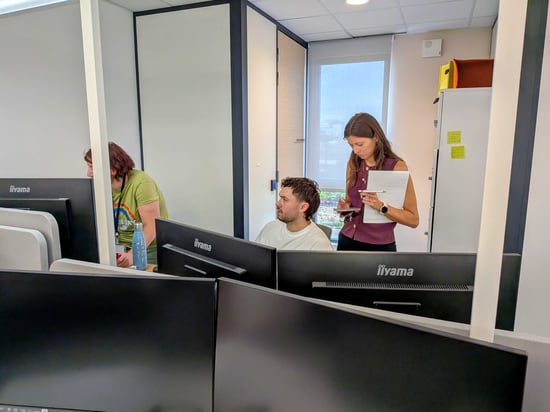
Front desk: everything in one place
At the front desk, reservations, guest details, payments and guest questions all come together.
The Front Office Manager module brings reservations, guest profiles and internal notes together on one screen. The planning screen shows availability, while staff can create or modify reservations and process payments from the same environment.
Cancellations and no-shows are handled there, as well as the end-of-day cash closing.
The front desk team at Aloha, part of Sandaya, made a striking comparison during our visit:
Housekeeping and maintenance: the schedule is always changing
On a campsite, the schedule rarely stays the same all day. A guest arrives early. A departure is delayed. An accommodation unexpectedly needs to be cleaned again.
The Operations Manager module automatically creates a housekeeping schedule based on that day's arrivals and departures. When those change, the schedule is updated.
Housekeeping and maintenance teams can view the schedule live on mobile or desktop. They can see which tasks need to be completed, and from the management standpoint, the associated costs.
Simplicity also matters for seasonal staff. They get access to what they need using a one-time password.
The operations teams at Aloha were clear about the difference:
Customer service: knowing what has happened before
A guest question can come in by phone, email, chat or WhatsApp. The staff member then needs to quickly see what has already been discussed.
The Customer Service module brings that communication together and gives staff access to the guest's history.
As stated by the front desk team, Domaine de la Dragonnière, Sandaya :

You notice the difference most when it gets busy
The conversations at the five campsites kept coming back to the same point.
It is not only about what a PMS can do, but about how much effort it takes to actually use it.
New staff need to become independent quickly. A change to the schedule should not result in a series of manual steps. A staff member on the phone should not have to search through three different systems before helping a guest.
That sounds simple. In practice, it makes a big difference.
|
When software creates extra work |
When software supports the work |
|
New staff need weeks before they can work independently |
New staff can work independently sooner |
|
Information is spread across different systems |
Information is brought together |
|
Changes to arrivals and departures have to be processed manually |
The schedule is updated when arrivals and departures change |
|
Support relies on tickets and separate communication |
Staff can see communication and guest history together |
What does that mean for a PMS for outdoor hospitality?
A PMS for a large group needs to handle a lot. Different locations, accommodation types, employees and processes. The organisation is complex. The software does not have to be.
That was perhaps the most important confirmation from our visits to Sandaya and Siblu. Ease of use is not separate from functionality. It determines how quickly someone can get started, how much explanation a new employee needs and how much time teams spend searching.
That leaves one more question to ask when evaluating a PMS.
Not just:
What can the system do?
But also:
What is it like to use on a Tuesday in July at 11 am?
Because that is when you really see how a PMS works on site.


